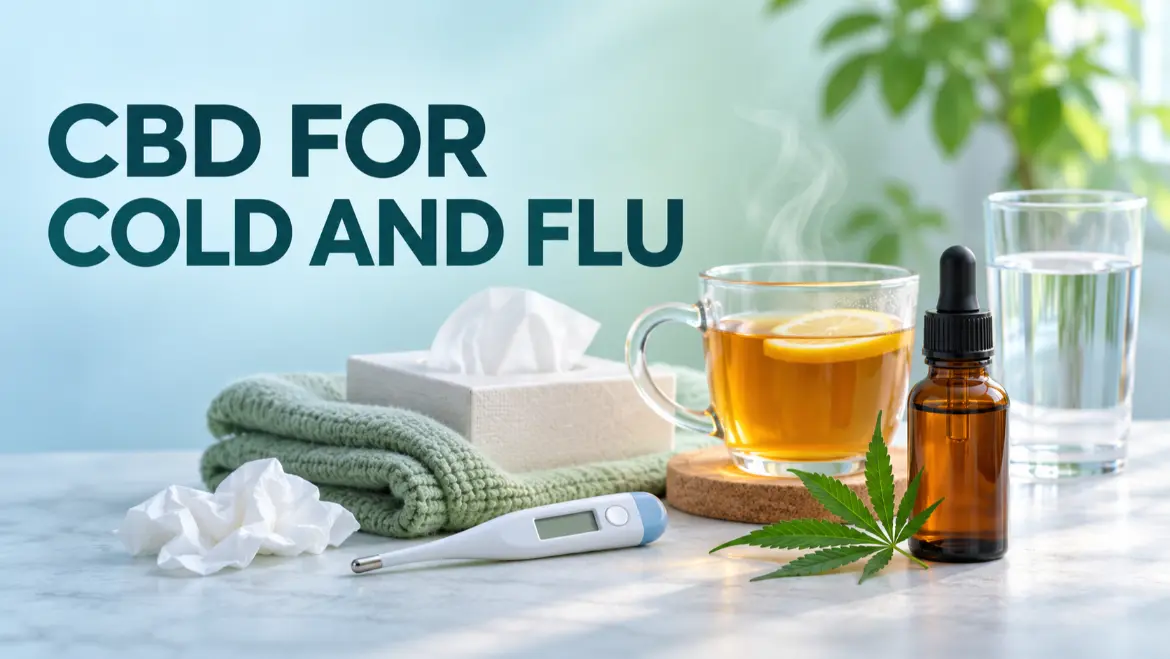
Quick answer: There is not enough reliable clinical evidence to show that CBD for cold and flu cures either infection, shortens the illness, or prevents complications. CBD might change how some people perceive discomfort, but that is different from treating a virus. Smoking or vaping cannabis can irritate the throat and lungs, while CBD can interact with medicines commonly taken during illness.
Table of Contents
If you are considering CBD for cold and flu, the safest first step is to identify what illness you may have. A mild common cold usually improves with time and supportive care. Influenza can become serious, particularly for older adults, pregnant people, young children, and people with certain medical conditions. Early antiviral treatment may be appropriate for flu, but CBD is not an antiviral treatment.
This guide explains what the evidence does and does not show, why smoking while sick can backfire, how CBD may interact with other medicines, and which practical measures are more likely to help.
Can CBD Treat a Cold or the Flu?
At present, CBD for cold and flu should not be described as a proven treatment. The common cold and influenza are caused by viruses. CBD has not been established as a medicine that clears these viruses, reliably reduces how long symptoms last, or lowers the risk of complications.
The US Food and Drug Administration has approved one prescription CBD medicine for specific seizure disorders. It has not approved over-the-counter CBD oils, gummies, drinks, or inhaled products to treat a cold or influenza. The FDA overview of cannabis-derived products also explains that unapproved CBD products have not gone through the same review for effectiveness, safe dosage, drug interactions, and side effects.
This distinction matters. A person may feel calmer, sleepier, or less focused on an ache after taking a cannabinoid product, but subjective comfort is not proof that the infection is improving. Fever, dehydration, breathing difficulty, or worsening symptoms still require appropriate attention.
In other words, CBD for cold and flu may affect how a symptom feels without changing what is causing it.
Why Early Research Does Not Equal a Treatment
Laboratory studies sometimes explore how cannabinoids affect inflammation or immune signaling. Those findings can generate research questions, but they do not prove that a retail product helps a person recover from a respiratory infection. The dose, formulation, route of use, study setting, and human outcome all matter.
For that reason, claims that CBD for cold and flu “boosts immunity,” “kills the virus,” or “speeds recovery” go beyond the available evidence. A medically cautious article should separate a possible effect on comfort from an effect on the underlying infection.
Does Weed Help With a Cold or Flu
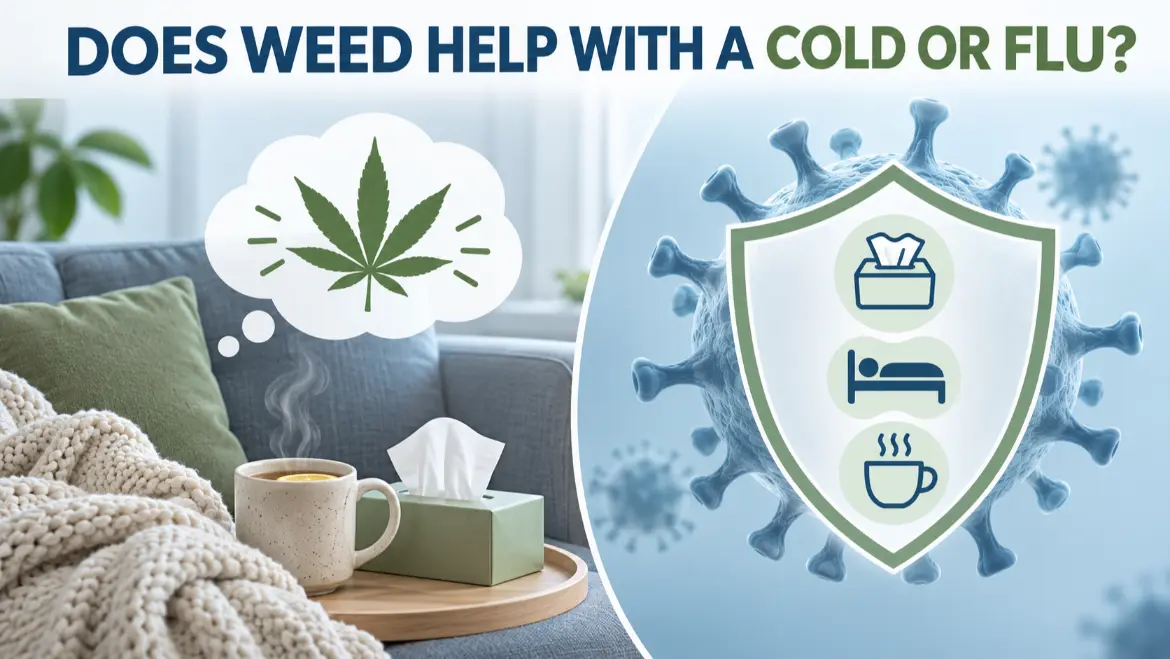
People asking “does weed help with a cold” are often looking for relief from body aches, poor sleep, headache, or loss of appetite. Cannabis may alter the way discomfort is experienced, particularly when a product contains THC. However, it does not follow that the cold is being treated, and impairment may make it harder to monitor symptoms or use medicine correctly.
The answer to “does weed help flu” is similarly limited. Influenza can cause fever, chills, marked fatigue, muscle aches, headache, cough, and sometimes serious complications. Feeling temporarily distracted from those symptoms is not the same as reducing the virus or the risk of pneumonia. CBD for cold and flu should never delay testing, medical advice, or an antiviral prescription when one is indicated.
This makes CBD for cold and flu a comfort question, not an infection-treatment strategy.
CBD and THC Are Not Interchangeable
CBD does not usually produce the intoxicating “high” associated with THC, but products differ. A full-spectrum CBD product may contain some THC, and inaccurate labeling or contamination can make the actual contents uncertain. THC can impair attention, judgment, coordination, and reaction time. That can be especially unhelpful when someone is feverish, dehydrated, or taking a sedating cold medicine.
The label therefore matters whenever someone is evaluating CBD for cold and flu.
Readers who want to understand the difference between isolate, broad-spectrum, and full-spectrum products can review StoreZiller’s CBD gummies comparison. That page is a shopping comparison, not evidence that gummies treat respiratory infections. Product format does not turn an unproven cold remedy into a proven one.
Could CBD Reduce Aches or Help Sleep?
Some adults report that CBD changes relaxation, discomfort, or sleep. Individual reports cannot establish effectiveness for a cold or flu, and the available retail products vary widely. Illness itself, rest, other medicines, expectations, THC content, and product quality can all affect what someone feels.
If CBD for cold and flu seems to make a person sleepy, that effect also creates a safety question. Combining CBD with antihistamines, nighttime cold remedies, alcohol, sleep aids, or other sedating substances could increase drowsiness. Driving or operating equipment is not appropriate when impaired.
Does Weed Help a Sore Throat?
The short answer is that smoking weed is more likely to irritate a sore throat than heal it. Smoke is hot, dry, and chemically irritating. A brief change in pain perception does not repair inflamed tissue or treat the viral or bacterial cause.
For a sore throat, CBD for cold and flu is not a substitute for identifying the cause and using appropriate comfort care.
The CDC sore throat guidance recommends practical comfort measures such as warm beverages, fluids, salt-water gargles, a clean humidifier, ice chips, and age-appropriate lozenges. Honey may help cough in adults and children at least one year old, but honey should never be given to a baby younger than one year.
When people search “does weed help a sore throat,” they may also be comparing smoke, vapor, edibles, oils, and drinks. Avoiding inhaled products removes the direct smoke or aerosol exposure, but it does not make CBD for cold and flu an evidence-based treatment. Oral products still carry interaction, dosing, labeling, and side-effect concerns.
A Sore Throat May Need a Different Diagnosis
A sore throat can occur with a cold, flu, COVID-19, allergies, irritation, or strep throat. Severe throat pain, difficulty swallowing, drooling, dehydration, a rash, breathing trouble, or persistent symptoms should not be managed by masking discomfort with cannabis. Testing or professional assessment may be needed.
Can Smoking Weed Make a Cold Worse
Yes, it can make cough, mucus, throat irritation, or chest discomfort feel worse. The CDC’s cannabis and lung health guidance states that cannabis smoke contains many of the same toxins and irritants as tobacco smoke. Smoking cannabis is also associated with a higher risk of bronchitis, cough, and mucus production.
That is why smoking is a particularly poor route for anyone considering CBD for cold and flu. The airways may already be inflamed and sensitive. Adding smoke can trigger coughing, dryness, burning, wheezing, or a feeling of chest tightness. People with asthma, chronic obstructive pulmonary disease, or another lung condition may face greater concern.
The route of use is one of the biggest safety issues in any discussion of CBD for cold and flu.

Smoking Weed With the Flu
Smoking weed with the flu combines an irritating exposure with an illness that can already affect the respiratory system. Flu can progress from upper-airway symptoms to more serious breathing problems. Cannabis smoke does not disinfect the airway, open the lungs in a medically reliable way, or prevent a complication.
THC-related impairment can introduce additional problems. A sick person might take too much of another medicine, miss a warning sign, become unsteady, or drive while impaired. If smoking weed with the flu makes breathing, coughing, dizziness, confusion, or chest pain worse, stop and seek appropriate medical advice.
What About Vaping?
Vaping avoids combustion, but it is not harmless. Aerosols can still irritate the throat and lungs, and the contents of cartridges may vary. A respiratory illness is not a good time to expose sensitive airways to smoke or aerosol. Do not assume a vape is a safer form of CBD for cold and flu simply because there is no visible smoke.
What About Edibles, Oils, or Drinks?
Non-inhaled products avoid direct smoke exposure, but they introduce other issues. Effects may be delayed, serving sizes may be confusing, and some products contain THC. Oils or gummies can also interact with medication. A drink containing cannabinoids may include sugar, caffeine, herbs, or other active ingredients that complicate the picture.
Those tradeoffs mean non-inhaled CBD for cold and flu should not automatically be treated as harmless.
StoreZiller’s BRĒZ social tonics review illustrates why labels require close reading: some cannabinoid drinks contain both CBD and THC plus additional ingredients. That type of product is not a flu treatment and should not be used as a substitute for hydration, evaluation, or prescribed antiviral medicine.
CBD, Cold Medicine, and Drug Interactions
One of the most important cautions around CBD for cold and flu is the possibility of drug interactions. CBD can affect how the body processes some medicines. A cold or flu often leads people to combine several products, such as a pain reliever, cough suppressant, decongestant, antihistamine, sleep aid, or prescription drug. That makes it easy to overlook duplicated ingredients or additive side effects.
The FDA consumer update on CBD safety warns about drug interactions, liver injury, and changes in alertness. The fact that a product is sold without a prescription does not mean it is risk-free.
Medication review is therefore a central part of deciding whether to avoid CBD for cold and flu.
Drowsiness Can Add Up
CBD may cause sleepiness in some people. Several nighttime cold products and older antihistamines are also sedating. Combining them may intensify fatigue, dizziness, slowed reactions, or confusion. Alcohol, THC, sleep medication, opioid pain medicine, and anti-anxiety medicine can add further impairment.
Anyone considering CBD for cold and flu should ask a pharmacist to review the exact CBD label and every prescription, over-the-counter medicine, and supplement being used. This is more useful than relying on a broad online interaction checker because the product’s ingredients and the person’s health history matter.
Liver and Medication-Processing Concerns
The liver processes CBD and many medicines. The FDA has identified potential liver-injury concerns with CBD, particularly at studied prescription doses, and interaction risks can change medicine levels. People with liver disease or those taking medicines that require monitoring should be especially cautious.
Do not use CBD for cold and flu to replace a prescribed medicine. Do not stop a regular medicine because of an online article. A clinician or pharmacist can advise whether a combination should be avoided, separated, monitored, or adjusted.
Read Combination-Product Labels
Many cold medicines contain more than one active ingredient. Two products with different brand names may both contain acetaminophen, an antihistamine, or a cough suppressant. Taking them together can cause accidental duplication. Add CBD or THC, and sedation or other side effects can become harder to interpret.
Keep a simple list of every product, active ingredient, amount, and time taken. If you call a pharmacist or clinician, have that list and the CBD package available.
Who Should Avoid CBD While Sick?
There is no single rule that covers every person, but CBD for cold and flu deserves extra caution or avoidance in several situations. Speak with a qualified healthcare professional if any of the following apply:
- You are pregnant, trying to become pregnant, or breastfeeding.
- The product is intended for a child or teenager.
- You have liver disease, significant lung disease, or a history of severe medication reactions.
- You take prescription medicines, especially medicines with a narrow safety range or sedating effects.
- You are at risk of falls, confusion, or dehydration.
- You must avoid THC because of employment testing, legal restrictions, driving, or personal sensitivity.
- The product has no clear ingredient list or accessible certificate of analysis.
Children should not be given retail CBD for a cold or flu unless a licensed clinician specifically directs its use. Product strengths, contaminants, and THC exposure create concerns, and common cough and cold medicines also have age restrictions.
For children, retail CBD for cold and flu is not an appropriate do-it-yourself remedy.
For adults who still choose a retail cannabinoid product, avoid inhaled forms while respiratory symptoms are present. Verify the label, keep it away from children and pets, do not mix it with alcohol, and do not drive. These precautions reduce some risks, but they do not establish a benefit from CBD for cold and flu.
What Actually Helps Cold and Flu Symptoms
The best-supported approach depends on whether the illness is a common cold, influenza, COVID-19, strep throat, or something else. CBD for cold and flu should not distract from testing or time-sensitive treatment when symptoms and risk factors suggest flu or COVID-19.
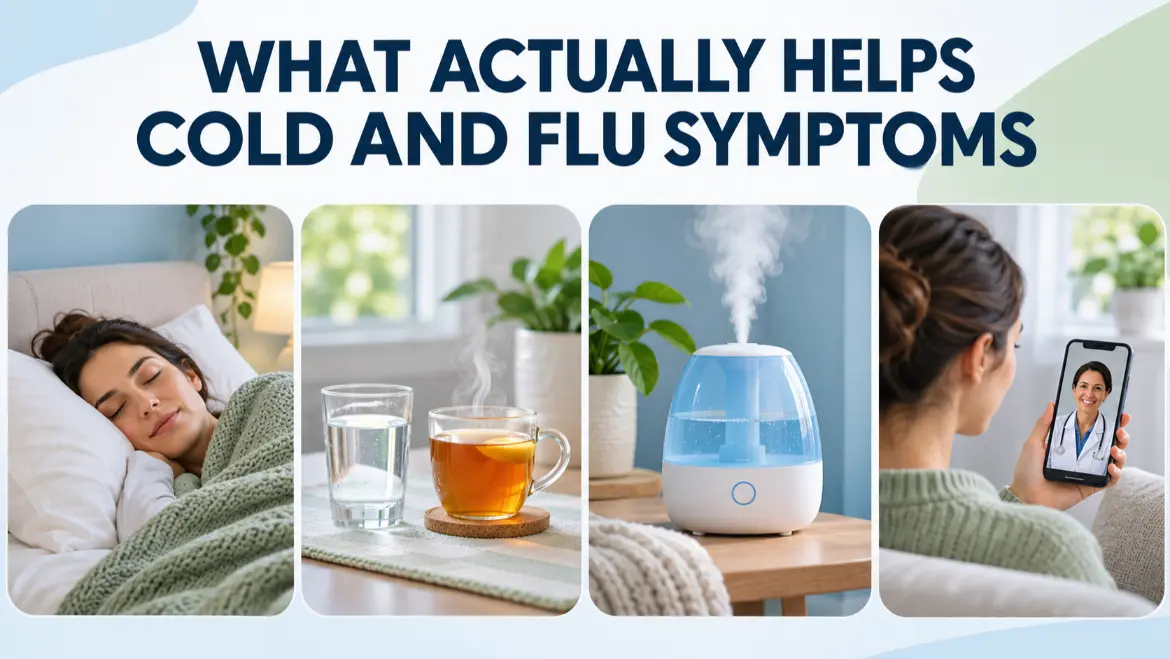
For an uncomplicated common cold, the CDC’s common cold care guidance recommends rest, plenty of fluids, a clean cool-mist humidifier, saline nasal spray or drops, steam, and age-appropriate throat lozenges. Over-the-counter medicines may temporarily reduce symptoms, but they do not cure the infection. Ask a pharmacist which options are safe for you.
Supportive Care for a Cold
Practical care is simple but useful:
- Rest and reduce strenuous activity while feverish or unusually fatigued.
- Drink enough fluid to keep urine from becoming very dark and to replace losses from fever.
- Use saline spray or drops for nasal dryness and congestion.
- Use a clean humidifier and follow its cleaning instructions.
- Try warm fluids, salt-water gargles, or honey for cough if age-appropriate.
- Ask a pharmacist about pain or fever medicine that fits your health conditions and current medications.
These steps are less exciting than marketing claims about CBD for cold and flu, but they are more consistent with public-health guidance.
They also address common comfort needs without presenting CBD for cold and flu as a virus treatment.
Flu May Need Prompt Antiviral Treatment
Prescription antiviral medicines can treat influenza. According to the CDC flu antiviral guide, they work best when started within one to two days after symptoms begin. Prompt treatment is especially important for people who are hospitalized, very sick, or at higher risk of serious complications. Treatment can still help some high-risk or severely ill people when started later.
If you are pregnant, age 65 or older, very young, immunocompromised, or living with asthma, chronic lung disease, diabetes, heart disease, or another high-risk condition, contact a healthcare professional promptly when flu is suspected. Do not wait to see whether CBD for cold and flu changes the symptoms.
Reduce Spread While Recovering
Stay home when sick except to obtain care, improve ventilation when possible, cover coughs and sneezes, wash hands, and follow current public-health guidance for respiratory viruses. Do not share smoking or vaping devices, cups, utensils, or mouthpieces. Shared items can spread saliva and respiratory secretions.
How to Evaluate a CBD Product Without Believing Health Hype
This article does not recommend buying CBD as a respiratory treatment. However, adults who use CBD for another reason should know how to assess a label while sick.
First, reject products that promise to cure, prevent, or rapidly eliminate a cold or flu. Those claims are not supported for retail CBD. Second, check whether the product clearly states the amount of CBD per serving and whether it contains THC. Third, look for a recent batch-specific laboratory report from an independent laboratory that checks cannabinoid content and contaminants.
Even a well-labeled product does not prove that CBD for cold and flu works. Testing can help confirm what is in a package, but it cannot turn an unsupported medical claim into evidence.
Questions to Ask Before Using Any Product
- Does the label list every active ingredient and the amount per serving?
- Is THC present, and could that affect driving or drug testing?
- Is the laboratory report tied to the product’s batch number?
- Does the seller make disease-treatment claims?
- Could the product interact with a prescription or over-the-counter medicine?
- Is the product legal where you live?
- Can a pharmacist review it before you combine it with cold or flu medicine?
If the answers are unclear, the cautious choice is to skip the product while ill.
No package design or laboratory report can prove that CBD for cold and flu treats a respiratory infection.
When to Seek Medical Care
Do not rely on CBD for cold and flu when symptoms are severe, unusual, or getting worse. Seek urgent medical help for trouble breathing, chest pain or pressure, bluish or gray lips, severe confusion, fainting, a seizure, inability to stay awake, or signs of severe dehydration.
Contact a healthcare professional for fever lasting more than four days, symptoms lasting more than ten days without improvement, symptoms that improve and then return or worsen, or a chronic condition that becomes worse. A person at high risk for flu or COVID-19 complications should contact a clinician early, even if the illness initially seems mild.
Infants, older adults, pregnant people, and people with compromised immune systems may need earlier evaluation. When in doubt, describe the symptoms, when they began, temperature readings, breathing changes, health conditions, and all medicines or cannabinoid products used.
Frequently Asked Questions
Does Weed Help With a Cold?
Weed may temporarily change how an adult perceives aches, sleep, or appetite, but it has not been shown to cure the virus or reliably shorten a cold. Smoking can irritate the throat and lungs, so inhaled cannabis may make cough or congestion more uncomfortable.
Does Weed Help Flu Symptoms?
There is no good evidence that weed treats influenza. THC may alter symptom perception, but it can also impair judgment and increase sleepiness. Flu antivirals are the relevant prescription treatment, especially when started early for people at higher risk.
Does Weed Help a Sore Throat?
Smoking weed can dry and irritate an already sore throat. Warm fluids, salt-water gargles, a clean humidifier, age-appropriate lozenges, and honey for people at least one year old are more consistent with CDC comfort-care guidance.
Can Smoking Weed Make a Cold Worse?
It can worsen irritation, cough, mucus, burning, or chest discomfort. Cannabis smoke contains toxins and irritants, and respiratory symptoms are a reason to avoid adding smoke or aerosol to the airways.
Is CBD Oil Safer Than Smoking While Sick?
CBD oil avoids direct smoke exposure, but “safer for the lungs” does not mean proven or risk-free. Oils can contain THC, cause side effects, have inaccurate labels, and interact with medicines. Ask a pharmacist before combining an oil with cold or flu products.
Can I Take CBD With Cough Syrup or Nighttime Cold Medicine?
Do not assume the combination is safe. CBD and some cough, allergy, or nighttime medicines can cause drowsiness, and CBD may affect how the body processes certain drugs. Have a pharmacist check the exact products and active ingredients.
Will CBD Lower a Fever?
CBD is not an established fever treatment. A fever may be part of a cold, flu, COVID-19, or another infection. Use age-appropriate fever care recommended by a healthcare professional, drink fluids, and seek care for severe or persistent symptoms. Using CBD for cold and flu should never delay evaluation of a high, persistent, or concerning fever.
Can CBD Prevent a Cold or Flu?
There is no reliable evidence that retail CBD prevents a cold or influenza. Vaccination, respiratory hygiene, handwashing, ventilation, and current public-health recommendations are more appropriate prevention measures. Prevention claims for CBD for cold and flu should be treated as unsupported marketing unless strong clinical evidence becomes available.
Final Verdict
The evidence does not support CBD for cold and flu as a cure, antiviral treatment, or dependable way to shorten illness. Some adults may perceive temporary relaxation or a change in discomfort, but that possible experience must be weighed against drowsiness, drug interactions, liver concerns, THC exposure, product-quality problems, and delayed medical care.
Smoking or vaping cannabis is the least sensible approach when the throat and lungs are already irritated. For most uncomplicated colds, rest, fluids, humidity, saline, and appropriate symptom medicines are more practical. For suspected flu, especially in a high-risk person, prompt medical contact matters because prescription antiviral treatment is time-sensitive.
If you are still considering CBD for cold and flu, show the exact product label and your full medication list to a pharmacist or clinician first. A cautious conversation is far more useful than a marketing promise.
This article contains affiliate links. If you purchase through our links, we may earn a commission at no extra cost to you. We only recommend products we genuinely believe in. Read our Affiliate Disclaimer for full details.