
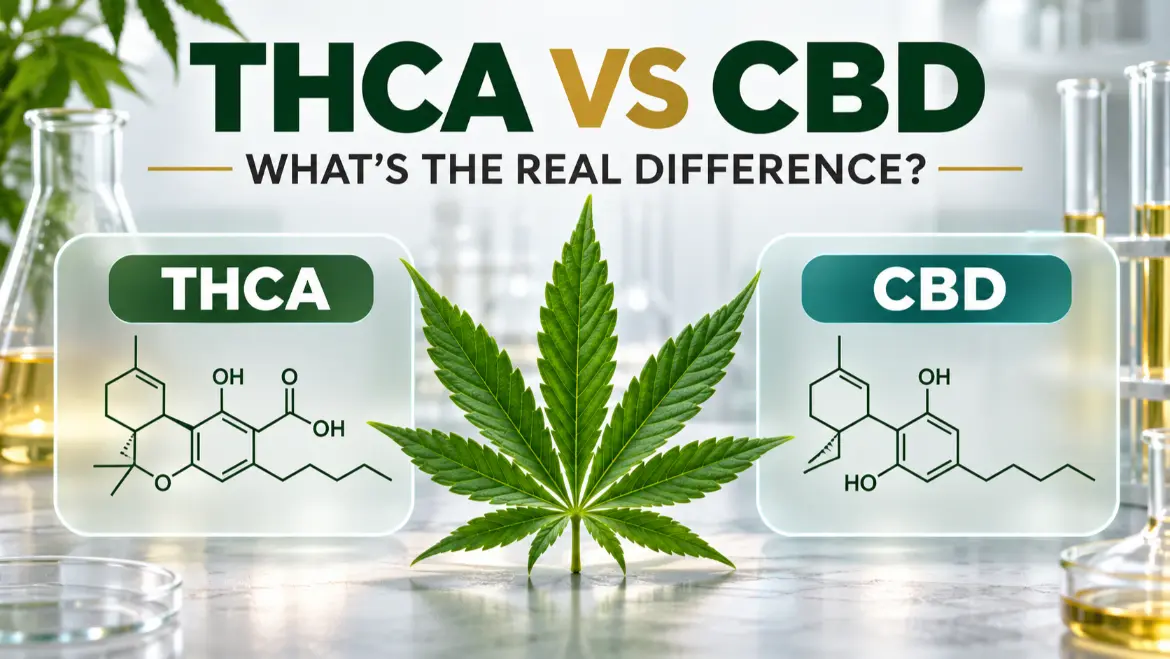
THCA vs CBD comes down to chemistry, heat, intoxication, drug-testing risk, and legal treatment. THCA is the acidic precursor that can convert into intoxicating THC when heated. CBD is a different cannabinoid and is not considered intoxicating. However, neither label guarantees a risk-free, legal, accurately formulated, or drug-test-safe product.
Table of Contents
This guide explains what each compound is, why THCA may behave differently after heating, and why a person subject to workplace testing should be especially cautious. It provides general education, not medical or legal advice.
The short THCA vs CBD answer is that THCA can become THC, while CBD cannot.
THCA vs CBD Quick Comparison
| Question | THCA | CBD |
|---|---|---|
| Full name | Tetrahydrocannabinolic acid | Cannabidiol |
| Where it occurs | Primarily in raw cannabis material | Cannabis and hemp varieties |
| Intoxicating in its unheated form | Not generally considered intoxicating | Not considered intoxicating |
| What heat can do | Convert THCA into delta-9 THC | Does not convert CBD into THC |
| Drug-test concern | A positive THC result is possible | Pure CBD is not the usual target, but products may contain THC |
| Main consumer risk | Heat conversion, THC exposure, labeling, legality | Interactions, labeling, contamination, unintended THC |
| FDA status | No FDA-approved THCA consumer wellness product | One prescription CBD drug is FDA approved for specific seizure disorders |
The most important THCA vs CBD distinction is that THCA sits directly on the chemical pathway to THC, while CBD does not. That single difference affects intoxication, laboratory reports, drug testing, product handling, and legal interpretation.
What Is the Difference Between THCA and CBD?
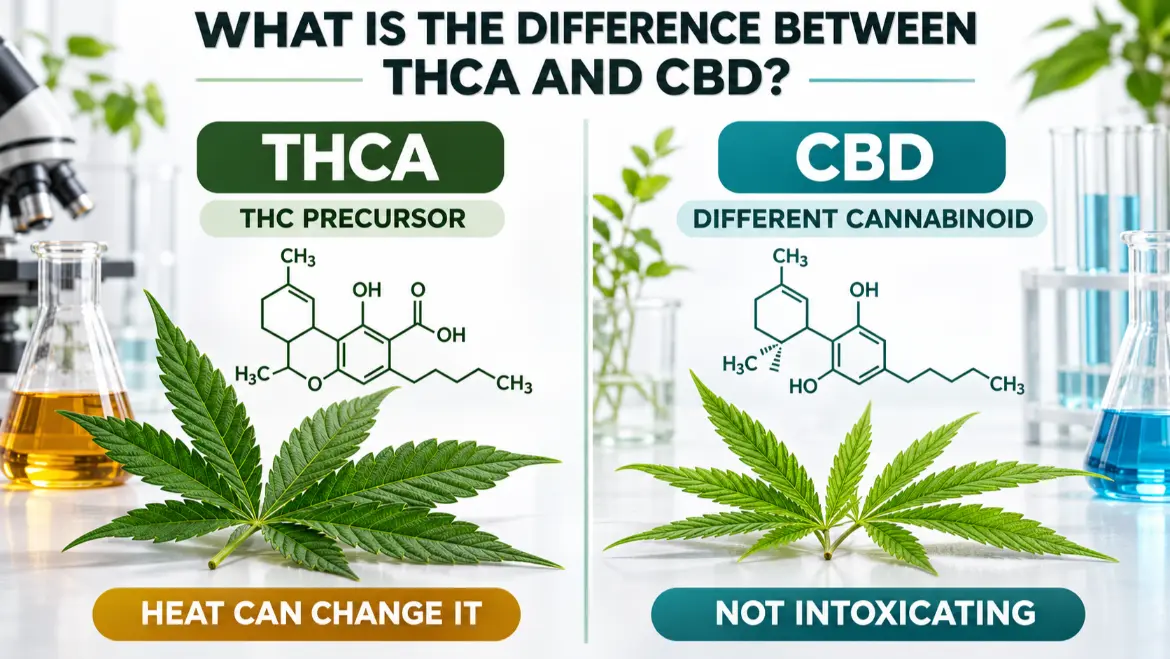
THCA, or tetrahydrocannabinolic acid, is a naturally occurring acidic cannabinoid produced by the cannabis plant. It is commonly described as the precursor to delta-9 THC because heat and time can remove part of its molecular structure through a process called decarboxylation.
CBD, or cannabidiol, is a separate cannabinoid with a different molecular structure and pharmacological profile. CBD does not become THC when heated. It also does not produce the typical intoxication associated with delta-9 THC.
This THCA vs CBD chemical difference explains why the two labels should never be treated as interchangeable.
That means THCA vs CBD is not simply a comparison between two versions of the same ingredient. They are distinct compounds with different relationships to THC.
The peer-reviewed review of THCA chemistry describes THCA-A as the acidic precursor of delta-9 THC. It also explains that decarboxylation can happen gradually during storage and more rapidly during heating.
In practical terms:
- Raw or carefully stored plant material may contain substantial THCA.
- Heating can convert a portion of that THCA into THC.
- CBD remains CBD when heated rather than transforming into THC.
- A product may contain several cannabinoids at the same time.
When readers compare THCA vs CBD, they should therefore look beyond the largest word on the front label. The laboratory report, total THC calculation, product type, intended handling, and local law can matter more than the marketing name.
What THC A Actually Means
People sometimes search “what THC A” because product labels separate the letters in inconsistent ways. THCA, THC-A, and delta-9-tetrahydrocannabinolic acid generally refer to the acidic precursor found in the plant before substantial decarboxylation.
THCA is not the same compound as delta-9 THC. The extra carboxyl group in THCA changes how the molecule interacts with the body. When that group is removed through decarboxylation, the remaining molecule is delta-9 THC.
The simplified relationship is:
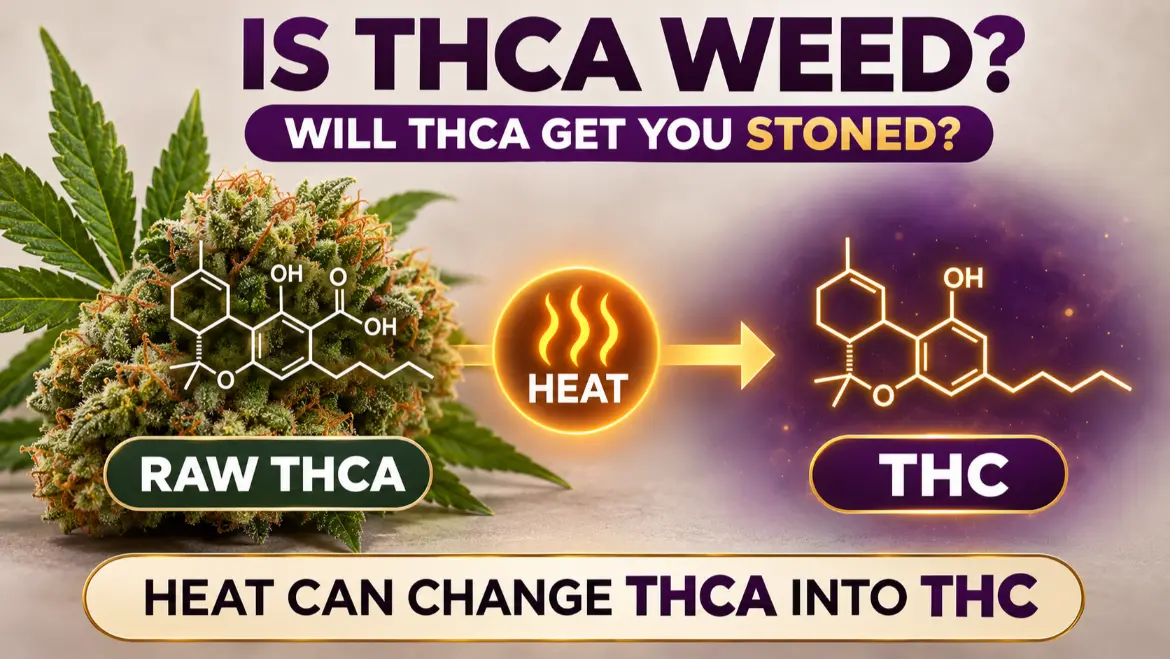
THCA + sufficient heat or degradation over time → delta-9 THC
For anyone studying THCA vs CBD, this conversion pathway is the essential concept to remember.
This is why a laboratory certificate may list separate values for THCA, delta-9 THC, and “total THC.” Total THC is intended to estimate the amount of delta-9 THC available after accounting for potential conversion.
The USDA hemp laboratory guidelines require compliance testing methods to consider the potential conversion of THCA into THC. USDA guidance explains that total available THC reflects both existing delta-9 THC and the THC that could be derived from THCA.
This chemistry is central to THCA vs CBD because CBD does not have an equivalent conversion into intoxicating THC. CBD products can still contain THC through formulation, full-spectrum extracts, contamination, or inaccurate labeling, but CBD itself does not become THC simply because it is warmed.
Is THCA the Same as THC?
No. THCA and delta-9 THC are chemically related, but they are not identical.
Unheated THCA is generally described in scientific literature as non-intoxicating. Delta-9 THC is the principal cannabis compound associated with intoxication. The distinction can disappear in practice when THCA-rich material is exposed to enough heat to convert a meaningful portion into THC.
This is also the answer to the supporting question, what’s the difference between THC and THCA? THCA is the acidic precursor, while THC is the decarboxylated compound associated with the familiar psychoactive effect.
The distinction should not be interpreted as proof that every THCA-labeled item is non-intoxicating. Products can contain measurable delta-9 THC before use, and manufacturing, storage, or heat may change their composition.
The safest THCA vs CBD comparison evaluates the finished product rather than an isolated compound in theory.
In a THCA vs CBD comparison, both can be described as non-intoxicating in their isolated, unheated form, but only THCA has the direct potential to become delta-9 THC through decarboxylation.
Will THCA Get You Stoned?
Unheated THCA is not generally expected to produce the classic intoxicating effect associated with delta-9 THC. However, heating THCA can convert it into THC, which can cause intoxication.
Whether a specific item produces an effect depends on more than its name.
In practical THCA vs CBD terms, product composition and handling determine more than the marketing category alone.
Relevant factors include:
- The amount of THCA present
- Existing delta-9 THC in the product
- How much conversion occurs
- The product’s accuracy and purity
- The person’s exposure and individual sensitivity
- Other cannabinoids or ingredients in the formulation
This means the answer to “will THCA get you stoned?” cannot be reduced to a universal yes or no. Raw, isolated THCA is different from heated THCA-rich material. A label may also fail to reflect what is actually in the package.
CBD is different. CBD does not create a classic THC high and does not convert into THC when heated.
Still, the FDA’s consumer guidance on CBD and cannabis-derived compounds warns that many nonprescription products have not been evaluated for effectiveness, dosage, interactions, or safety. The agency has also reported concerns about inaccurate cannabinoid levels and contaminants.
For THCA vs CBD shoppers, “non-intoxicating” should never be treated as a guarantee about a finished product. Check the certificate of analysis, look for batch matching, and avoid driving or operating machinery if there is any chance of THC exposure or impairment.
Is THCA Weed and Will THCA Get You Stoned?
THCA is a cannabinoid naturally produced by cannabis plants, including plant material that may be legally classified as marijuana or hemp depending on the applicable definition, testing method, total THC level, and jurisdiction.
So, is THCA weed? THCA is a compound in cannabis, not a separate plant species. The casual word “weed” usually refers to cannabis plant material associated with marijuana.
A THCA-rich flower can look and smell similar to other cannabis flower because the botanical material may be very similar even when sellers use different legal or marketing labels.
This is why a THCA vs CBD label comparison cannot identify the plant’s legal classification by appearance.
The legal classification is more complicated than appearance. Federal agricultural testing considers the potential conversion of THCA when calculating total THC for hemp crops. State laws may impose additional restrictions on THCA flower, intoxicating hemp products, age limits, possession, shipping, and retail sales.
Federal hemp rules were also undergoing scheduled changes in late 2026, making old articles and product claims especially unreliable. Anyone buying, carrying, or shipping a THCA product should verify the current federal and state rules rather than relying on a seller’s statement that it is “legal hemp.”
In THCA vs CBD terms, CBD is commonly sourced from hemp but can also occur in marijuana-type cannabis. The source plant alone does not guarantee legality, safety, or absence of THC.
Will THCA Show on a Drug Test?
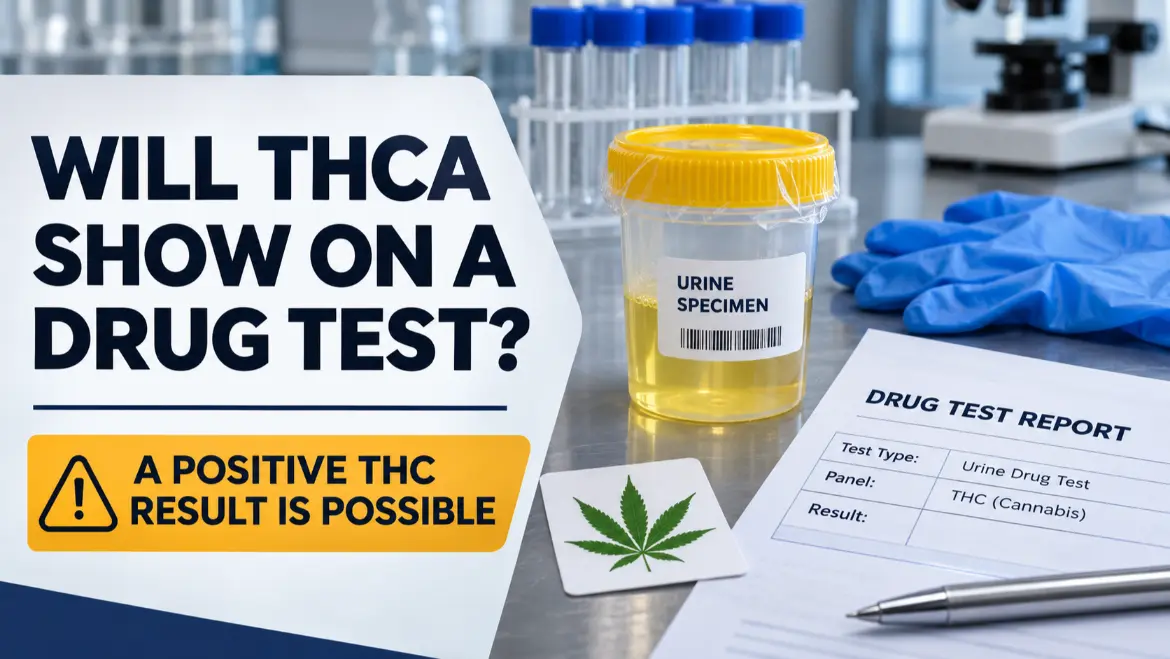
Yes, using a THCA product can lead to a positive test for THC exposure. This risk is especially important when the product is heated, contains delta-9 THC, or is inaccurately labeled.
Standard workplace urine tests generally look for a THC metabolite rather than attempting to prove which product was used. The American College of Medical Toxicology position statement explains that a positive urine THC-metabolite result indicates prior THC exposure but does not identify the source, route, exact timing, dose, or impairment.
Drug testing is one of the most important THCA vs CBD decision points for employees and athletes.
That means a person cannot normally defend a positive result simply by saying the package was labeled THCA or hemp. The test is not designed to confirm the marketing category of the original product.
Several factors affect whether THCA will show on a drug test:
- Whether the product already contains delta-9 THC
- Whether THCA was converted into THC before or during use
- Frequency and amount of exposure
- Product-label accuracy
- Individual metabolism
- The type of test and its cutoff
- Time between exposure and specimen collection
Consumers should also understand that “THC-free CBD” claims are not always reliable. Pure CBD is not the usual target of a standard THC-metabolite screen, but a full-spectrum or mislabeled product may contain enough THC to create risk.
The drug-testing difference in THCA vs CBD is therefore about probability, not certainty. THCA carries a clear THC-related risk. CBD isolate may present a lower risk when accurately produced, but no nonprescription product can guarantee a negative result.
If employment, probation, professional licensing, military service, athletics, or medical eligibility depends on a negative test, the safest approach is to avoid cannabinoid products unless the responsible testing authority provides written guidance.
THCA vs CBD Effects and Intoxication
THCA is widely described as non-intoxicating before conversion, while CBD is also considered non-intoxicating. That surface similarity can be misleading.
The practical THCA vs CBD effects profile changes once heat, THC content, and product accuracy are considered.
THCA is chemically positioned to become THC. CBD is not. Consequently, handling and product format matter much more for THCA.
| Consideration | THCA | CBD |
|---|---|---|
| Expected classic high in isolated form | Not generally expected when unheated | Not expected |
| Heat-related change | Can convert into THC | Does not convert into THC |
| Finished-product intoxication risk | Can be substantial depending on THC and conversion | Usually lower, but THC contamination or inclusion is possible |
| Drug-test concern | Significant | Possible when THC is present |
| Evidence for general wellness claims | Limited and not FDA approved | Many claims remain unapproved; one prescription CBD drug is approved |
The FDA has approved one prescription CBD medicine for specific seizure disorders. That approval does not mean store-bought CBD oils, gummies, beverages, creams, or flower are approved to treat pain, anxiety, insomnia, inflammation, or other conditions.
Similarly, laboratory and animal research involving THCA does not establish that retail THCA products treat disease. Research findings should not be converted into marketing promises.
For a real-world example of a consumer product that combines multiple cannabinoids, StoreZiller’s BRĒZ social tonics review discusses a labeled formulation containing both THC and CBD. Read the current package and seller documentation because formulas and laws can change.
THCA vs CBD Safety Considerations
Neither compound should be assumed safe for every person simply because it comes from a plant.
A responsible THCA vs CBD safety review should include medications, pregnancy, driving, age, and contamination risk.
CBD can interact with medications and may affect liver function. The FDA also warns about drowsiness, diarrhea, appetite changes, and potential reproductive concerns based on available evidence. The risk may differ by dose, formulation, other ingredients, and the individual.
THCA-specific human safety data are more limited. THCA products may also expose a consumer to THC, contaminants, pesticides, residual solvents, microbes, or inaccurate potency. Products sold outside regulated systems may not receive consistent testing.
Important precautions for THCA vs CBD include:
- Do not use during pregnancy or breastfeeding. The FDA advises against cannabis-derived products during these periods.
- Ask a clinician or pharmacist about medication interactions.
- Do not combine potentially impairing products with alcohol or sedating medicines.
- Keep all cannabinoid products away from children and pets.
- Do not drive if a product may contain or produce THC.
- Avoid products making disease-treatment or guaranteed-result claims.
- Treat a certificate of analysis as supporting information, not an absolute guarantee.
StoreZiller readers comparing consumer formats can review the site’s full-spectrum and broad-spectrum CBD product overview, but product descriptions should always be checked against current batch testing and official labeling.
How to Read a Certificate of Analysis
A certificate of analysis, often called a COA, is a laboratory report for a particular product batch. It may show cannabinoid potency and, when included, screening for contaminants.
For THCA vs CBD shoppers, the COA is more informative than front-label promises.
For a THCA vs CBD product, check the following:
Batch Match
The lot or batch number on the COA should match the package. A report for a different product or old batch does not verify what is in the item you have.
Separate Cannabinoid Values
Look for individual values for THCA, delta-9 THC, CBD, and other cannabinoids. Do not rely only on a large front-label number.
Total THC
Total THC is commonly calculated to account for the conversion potential of THCA. A frequently used formula is delta-9 THC plus THCA multiplied by a conversion factor of 0.877. The factor accounts for the molecular weight lost during decarboxylation.
Units
Confirm whether the report uses percentages, milligrams per gram, milligrams per serving, or milligrams per package. Values that look similar can represent very different amounts.
Laboratory Information
The report should identify the laboratory, testing date, methods, and sample. A QR code by itself is not proof unless it opens a complete, matching report.
Contaminant Testing
Depending on the product and jurisdiction, useful panels may include pesticides, heavy metals, microbes, mycotoxins, and residual solvents. “Lab tested” can mean only potency testing unless the report shows more.
When evaluating THCA vs CBD labels, missing information should increase caution. A professional design, natural imagery, or the words “premium” and “organic” cannot replace verifiable batch data.
Is THCA Legal?
The safest accurate answer is that THCA legality depends on current federal law, state law, product composition, total THC, and the specific activity involved.
Buying, possessing, manufacturing, mailing, carrying across state lines, and traveling by air may be treated differently.
USDA production rules already require hemp compliance testing to consider THCA conversion and total THC. Separate consumer-product rules have been changing, and states may classify or restrict THCA products more strictly than federal definitions.
Do not assume legality because:
- A website ships to your address
- A package says “hemp”
- Delta-9 THC is printed below 0.3%
- The seller says the product uses a loophole
- The same product is sold in a neighboring state
CBD also exists within a complicated regulatory system. The FDA’s cannabis-derived product guidance explains that the federal hemp definition did not remove FDA authority over foods, supplements, drugs, cosmetics, and therapeutic claims.
Legal uncertainty is another major THCA vs CBD difference. Although CBD products are widely available, availability does not equal FDA approval or universal legality for every formulation and use.
Product Labels: THCA Flower, CBD Flower, Isolate, and Full-Spectrum
Product form can change the practical meaning of THCA vs CBD.
THCA Flower
This generally refers to cannabis flower marketed for its THCA content. Because THCA can convert into THC when heated, this category carries intoxication and drug-testing concerns even when the pre-use delta-9 THC number appears low.
CBD Flower
CBD flower is plant material selected for CBD-related cannabinoids and lower THC levels. It can still contain measurable THC and may create drug-testing risk.
CBD Isolate
CBD isolate is intended to contain highly purified CBD with other cannabinoids removed. Accuracy depends on manufacturing and testing. “THC-free” should be verified against a current COA.
Broad-Spectrum CBD
Broad-spectrum products generally contain CBD plus other plant compounds while being formulated to remove THC. Trace contamination or labeling errors remain possible.
Full-Spectrum CBD
Full-spectrum extracts contain a wider range of plant compounds and may include THC within applicable limits. This format can create greater drug-testing concern than accurately produced isolate.
StoreZiller’s CBD product-format comparison can help readers understand how brands categorize these formats, but current COAs are still necessary for batch-level verification.
THCA vs CBD: Which One Should You Choose?
There is no universal “best” choice. The safer decision depends on why you are considering the product, whether you must avoid intoxication, whether you face drug testing, your medications, local law, and the reliability of the manufacturer.
Avoid THCA products if:
- You must pass a THC drug test
- You need to avoid impairment completely
- The product is prohibited where you live or travel
- No matching laboratory report is available
- You are pregnant or breastfeeding
- You are under the legal age
Use caution with CBD products if:
- You take prescription or over-the-counter medicines
- You have liver-related concerns
- You must avoid all THC exposure
- The product makes unsupported medical claims
- The batch report is missing or incomplete
- You are pregnant or breastfeeding
People comparing CBD product categories may also see StoreZiller’s CBD gummies overview. Treat wellness claims cautiously and discuss persistent symptoms with a qualified healthcare professional rather than relying on a retail product.
The most responsible THCA vs CBD decision may be to choose neither, particularly when drug testing, medication interactions, pregnancy, driving, age restrictions, or legal uncertainty are involved.
Frequently Asked Questions
What’s the difference between THC and THCA?
THCA is the acidic precursor naturally present in cannabis. Heat can remove a carboxyl group and convert THCA into delta-9 THC. THC is the compound primarily responsible for the classic intoxicating effect.
What THC A means on a label?
THC A usually means THCA or tetrahydrocannabinolic acid. Check the COA for separate THCA, delta-9 THC, and total THC values instead of relying only on the front label.
Will THCA show on a drug test?
It can. THCA products may contain THC or convert into THC, and standard tests usually look for THC metabolites rather than the product’s marketing label. Anyone who must test negative should avoid THCA products.
Is THCA weed?
THCA is a cannabinoid found in cannabis, not a separate type of plant. THCA-rich flower may be cannabis plant material marketed under hemp-related terminology, but its legal classification depends on current law and total THC rules.
Will THCA get you stoned?
Unheated THCA is not generally considered intoxicating. When it is heated, it can convert into delta-9 THC and may then cause intoxication.
Does CBD turn into THC when heated?
No. CBD does not become THC through ordinary heating. CBD products can still contain THC because of formulation, full-spectrum extracts, contamination, or inaccurate labeling.
Can CBD cause a positive drug test?
Pure CBD is not the usual target of standard THC testing. However, CBD products that contain THC can lead to a positive result. No retail CBD product can guarantee that a person will pass a test.
Is THCA safer than THC?
There is not enough evidence to declare retail THCA products universally safer. Unheated THCA is not generally intoxicating, but products may contain THC, convert into THC, or contain contaminants.
Final Verdict
THCA vs CBD is not simply “one gets you high and one does not.” THCA is the acidic precursor to THC and can become intoxicating THC through heat and degradation. CBD is a separate, non-intoxicating cannabinoid that does not convert into THC, but it can interact with medicines and may appear in products containing unintended or disclosed THC.
Drug testing is a major dividing line. THCA products can lead to a positive THC result, while accurately produced pure CBD presents a lower but not zero practical risk because labels and formulations vary.
Legality is also unsettled and location-specific. Check current federal and state rules, read a matching batch COA, and speak with a healthcare professional about medication interactions or medical concerns before using either compound.